
శ్రీ గోదావరి పుష్కరాలు 2027
Godavari Pushkaralu 2027 — dates, ghats, snanam, travel
While Tarpanam involves water and sesame seeds, Pinda Pradanam is a more formal rite involving rice balls (pindas). It is usually performed for parents and grandparents, and Pushkaralu is considered a highly auspicious time to do it.
In Hindu traditions, when a parent passes away, the eldest son (or the designated family member) takes on the responsibility of performing the annual Shraddha rituals. Pinda Pradanam is the physical offering of food to the departed soul.
Why do it at Pushkaralu? The scriptures state that performing these rites on the banks of the Godavari during the Pushkara period multiplies the spiritual benefit. It is believed to bring immense peace to the ancestors and remove any lingering family karmas.
Where to do it: Do not attempt this at the main bathing ghats like Kotilingala. It requires space, silence, and a priest's full attention. The state has designated Munikudali Ghat specifically for this ritual. Alternatively, you can go to Gowthami Ghat, which is the main hub for all Pitru Karma.
If you are performing this without a priest, you must know the exact mantras and the procedure (which varies slightly by family tradition). If you are unsure, it is best to hire an accredited priest at the ghat.
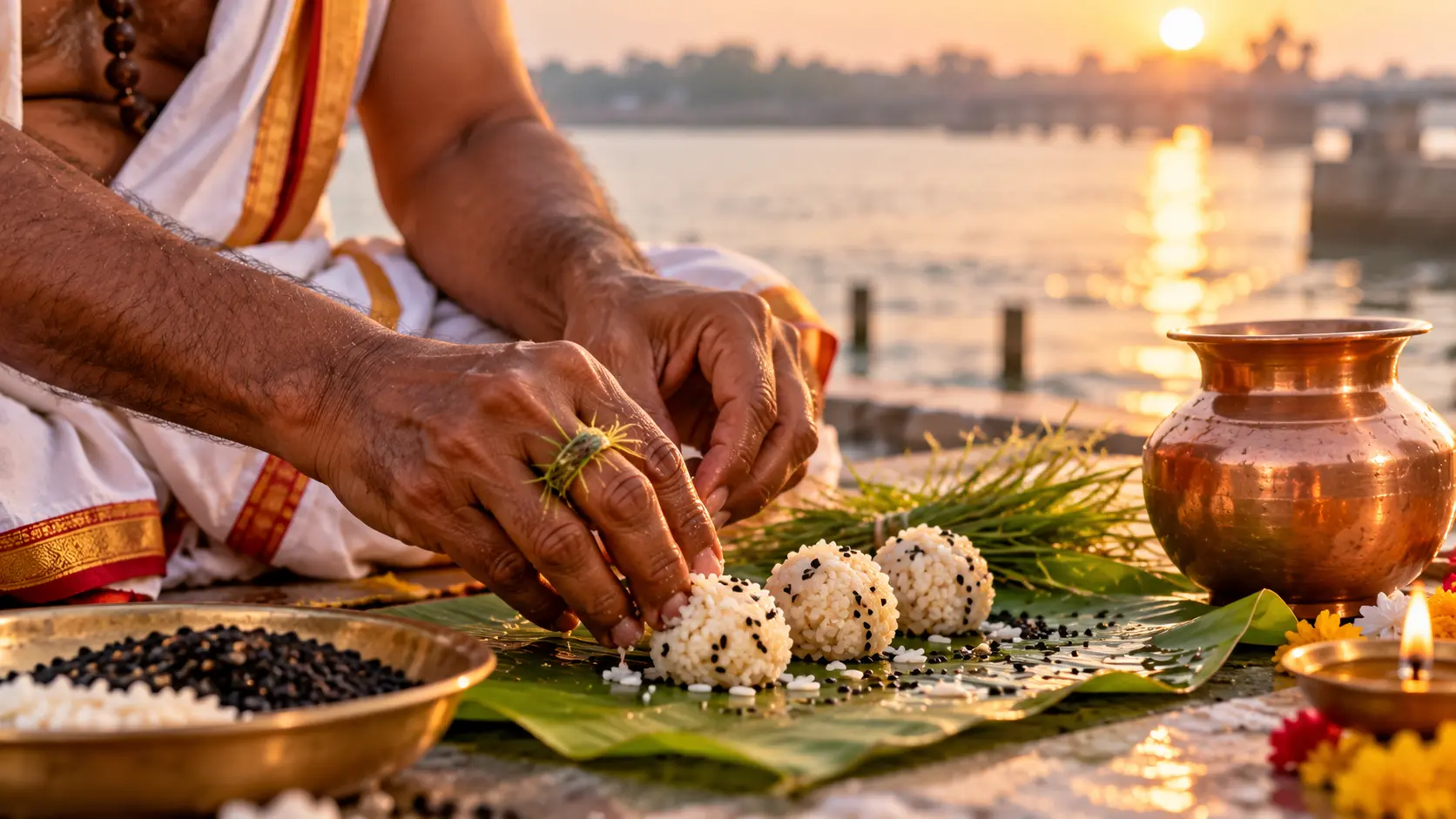
Many pilgrims confuse the two. Here is the simple difference.
| Feature | Tarpanam | Pinda Pradanam |
|---|---|---|
| Main Offering | Water, black sesame seeds | Cooked rice balls (Pindas) |
| Action | Water is poured into the river | Rice balls are placed on a leaf/platform |
| Who it is for | All ancestors (recent and distant) | Usually specific to parents/grandparents |
| Time required | 15–30 minutes | 45–60 minutes |
If you hire a priest, he will guide you through the entire process. You do not need to memorize the Sanskrit mantras. However, here is the general flow of the ritual: